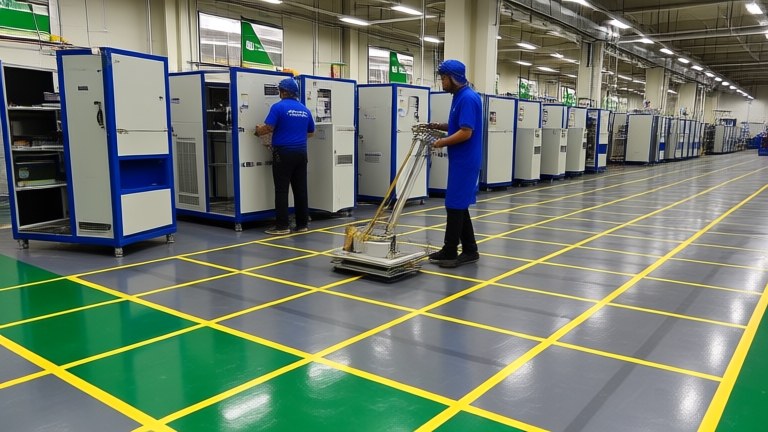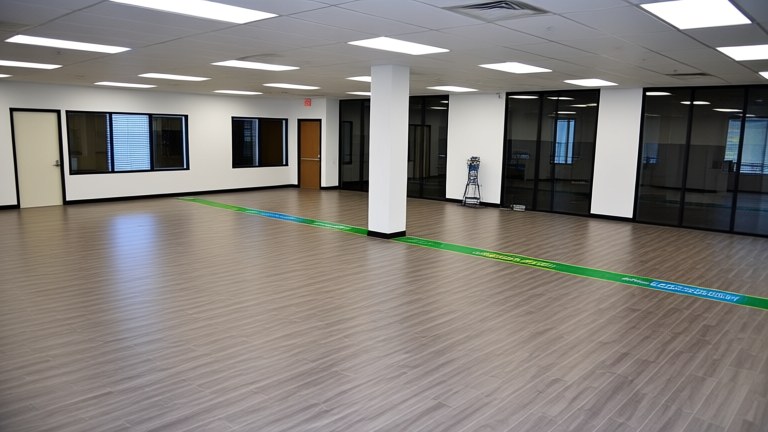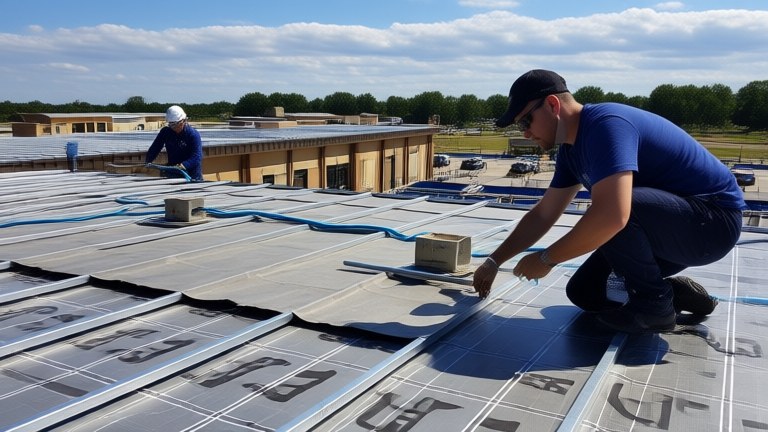
Electrostatic discharge can damage electronic components, disturb sensitive processes and create safety risks in controlled environments. Anti-static flooring forms one part of a complete strategy for safely managing electrical charge.
Where static becomes a project risk
Electronics assembly, server rooms, laboratories and precision manufacturing can all be vulnerable to electrostatic discharge. The risk depends on equipment sensitivity, materials, humidity, footwear and operating procedures—not the room name alone.
The project team should define the required resistance range and applicable facility standard before selecting a flooring product.
Conductive and dissipative systems
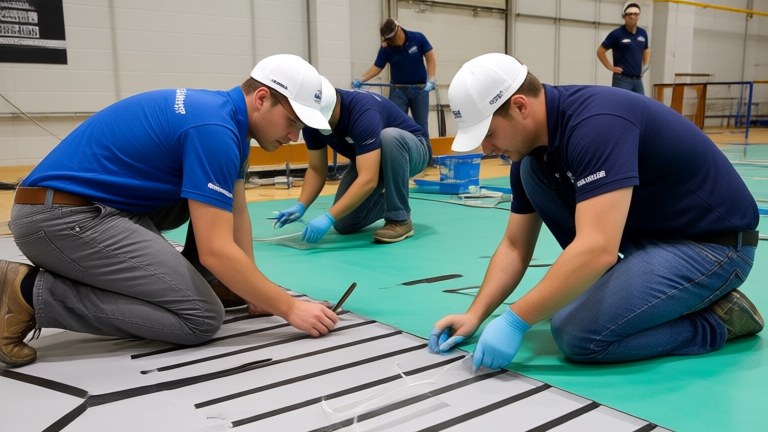
Conductive floors move charge more quickly, while static-dissipative floors control discharge within a higher resistance range. Both require a complete system of primer, conductive layer, copper earthing network and compatible topcoat.
The finished floor must be considered together with footwear, furniture and the building earth. A specialist coating cannot compensate for an incomplete grounding strategy.
Installation and verification
Substrate preparation is completed before the copper grid is laid and connected at approved earthing points. The resin build-up must maintain consistent thickness and continuity across joints and room boundaries.
Resistance readings should be taken across representative locations after curing, with results included in the handover record.
- Confirm the target resistance range
- Coordinate earthing before installation
- Test and document the completed floor
Key Takeaways
- Start with the process risk and required standard.
- Specify the floor, earthing and operational controls as one system.
- Require post-installation resistance testing.